
EMS cannot continue to be treated as a transportation service
EMS Is More Than a Ride to the Hospital — And Reimbursement Needs to Catch Up
Source: EMS1
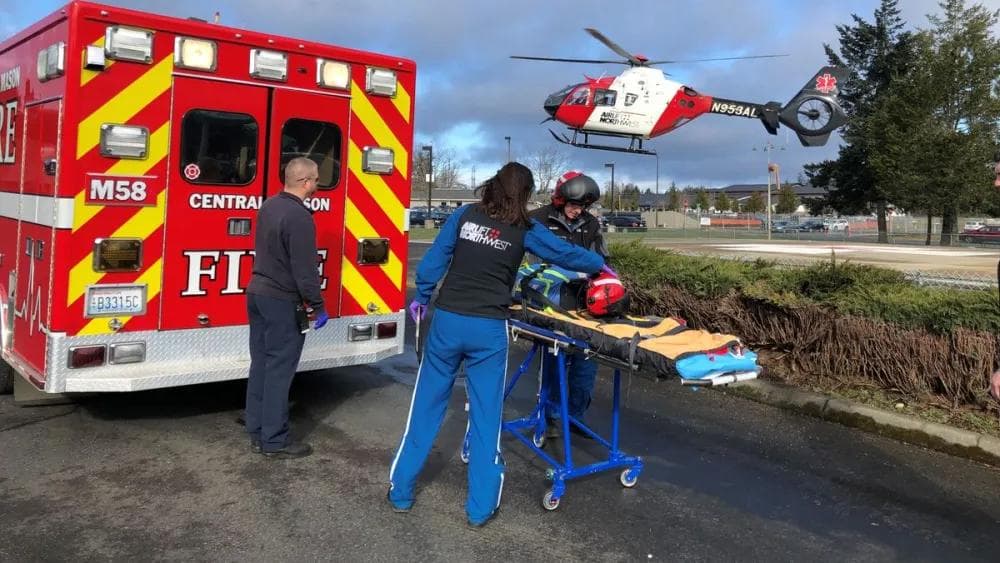
EMS Is More Than a Ride to the Hospital — And It's Time Our Systems Reflected That
In a recent EMS1 piece, EMS chief Paul Beamon makes a case that anyone who has worked a 911 call already feels in their bones: EMS is no longer just a transportation service, and treating it like one is holding the profession back.
He opens with a familiar scene. An older patient has fallen at home. The crew arrives expecting a routine lift-assist, but the real picture is more complicated: scattered and mismanaged medications, two days without much food, a walker that doesn't fit through the bedroom door, and a family that doesn't know whether to call 911, the doctor, or no one at all. The patient didn't need lights and sirens. What they needed was clinical judgment, a careful scene assessment, family education, and a connection to the next step in their care. The ambulance, Beamon notes, was only one part of the response — and the most valuable work that crew did would barely register in a system that only recognizes value when wheels turn toward the emergency department.
That's the heart of the argument. EMS is increasingly being asked to function as healthcare infrastructure — managing complex patients, behavioral health emergencies, public health needs, and gaps in access — while still being financed and measured as a transportation utility. Beamon points out that Medicare's ambulance payment structure remains built around base rates, billing codes, mileage, and transport-related service levels, creating a mismatch between what communities actually need and what payment and performance systems reward. The result is a model that can favor volume over appropriateness, transport over prevention, and reaction over readiness.
This tension is sharpest in rural and low-resource communities, where EMS may be the only immediately available healthcare resource for miles. Beamon cites a 2025 Chartis analysis finding that 46% of rural hospitals had negative operating margins and hundreds remain vulnerable to closure. In those settings, EMS isn't just moving patients through the system — it's often holding the system together until the next level of care is reachable.
Beamon is careful to avoid overcorrection. Transport will always be a core EMS function, and not every call needs a paramedic or advanced intervention. The point isn't whether EMS should transport patients; it's whether transport should remain the primary way EMS value is defined. He highlights the growth of mobile integrated healthcare and community paramedicine, along with CMS's ET3 model, as steps toward recognizing treatment in place and alternative destinations. But he's equally clear that innovation alone won't fix the problem. New programs fail when dispatch doesn't know when to use them, crews aren't trained, oversight is unclear, documentation doesn't match the workflow, or funding evaporates after year one. Innovation has to be operationalized — supported by policy, medical direction, data, reimbursement, and sustainable partnerships.
He also turns the lens back on the profession itself: if EMS wants to be recognized as healthcare infrastructure, it has to earn it through stronger clinical quality, documentation, data collection, and outcome measurement. A community isn't only paying for the ride — it's paying for readiness, for trained clinicians available at all hours whether or not anyone gets transported.
Where this connects to the business of EMS
That last point — readiness has a cost, and value extends well beyond the transport — is exactly where the administrative side of EMS has to keep pace with the clinical one. As agencies take on treat-in-place visits, alternative destinations, and community paramedicine, the back office has to capture and document that work cleanly enough to actually get reimbursed for it. Documentation that doesn't match the workflow, as Beamon notes, is one of the fastest ways for good clinical care to go unrecognized and unpaid.
This is one area where modern billing technology can quietly do a lot of heavy lifting. Platforms like MP Cloud Technologies are built to streamline ePCR-to-billing workflows, reduce manual rework, and tighten the documentation-to-claim loop — which helps lower the cost of billing while improving how accurately an agency's full value gets captured. When the administrative burden of compliant billing comes down, EMS leaders have more room to invest in the readiness, training, and program design that Beamon argues the future demands.
The path forward won't look the same for every system — fire-based, hospital-based, private, third-service, county, and volunteer models can all succeed or fail on design and execution. But the underlying message is consistent: EMS is clinical care, public safety readiness, healthcare navigation, and community infrastructure. It's time for both our funding models and our operational tools to catch up.